Biocracked
←

#golden oyster mushroom

1 article
Approach: macro science (with a conceptual split). Palette: D, bold color field.

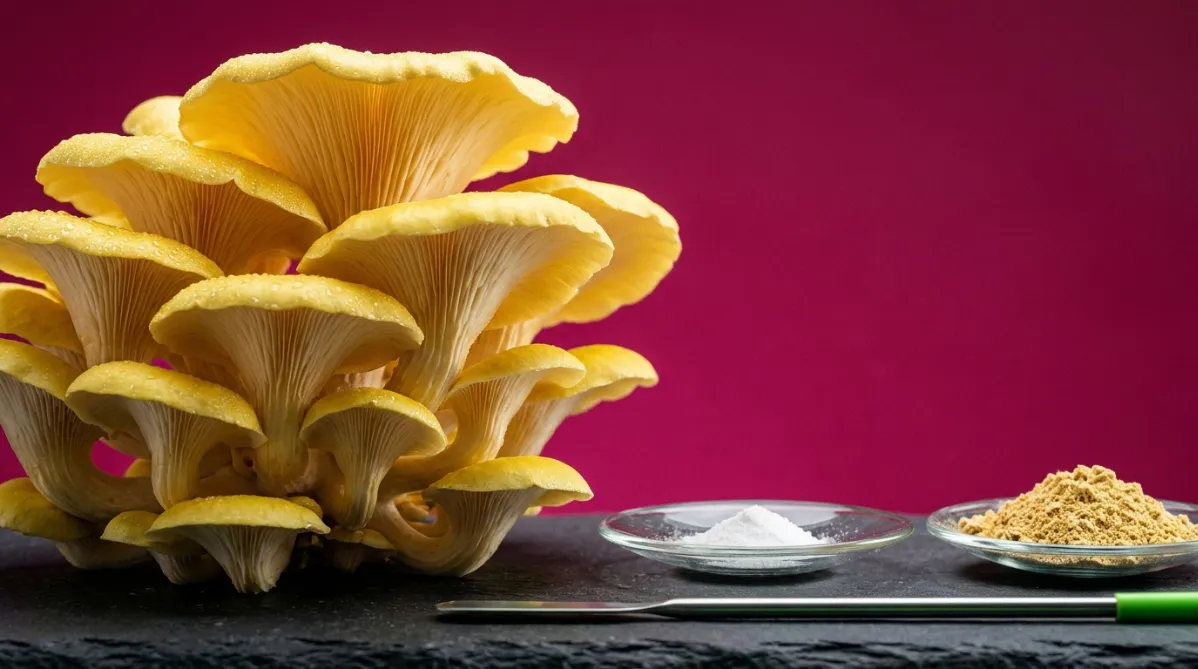
Extreme close-up photograph of a cluster of golden oyster mushrooms (Tamogitake), their ruffled, canary-yellow caps and fine gill structures sharply detailed, shot at a slight low three-quarter angle against a saturated magenta backdrop. In the foreground, a small glass watch dish holds a pinch of fine white crystalline powder, the isolated compound, sitting plain and inert beside a heap of fawn-yellow dried mushroom powder in a second dish. Soft directional studio light from the upper left gives the caps a translucent glow and creates crisp, short shadows. Tiny dew-like droplets cling to the gills. A single thin electric green stem of a lab spatula glints at the edge of the frame. Mood: curious, vivid, quietly skeptical, with the mushroom clearly outshining the isolate. No text or labels.
research

Este cogumelo reduziu a gordura no fígado de roedores — seu composto estrela não o fez

BY NOVA CHEN ·

Ergotiomina é o composto ao qual se atribui grande parte dos benefícios dos cogumelos, mas um novo estudo em roedores complica essa história. Ratos e camundongos obesos alimentados com pó de cogumelo ostra dourado (Tamogitake) apresentaram menores níveis de colesterol e triglicerídeos no fígado, enquanto os que receberam ergotiomina pura não mostraram diferença. O cogumelo também tendia a aumentar a excreção fecal de colesterol e ácidos graxos livres, efeito ausente no grupo que recebeu o isolado. Os autores concluem que os benefícios não podem ser atribuídos apenas à ergotiomina.

This page is available in